Think about the last time you actually noticed your technology.
It was probably a bad moment. The internet dropped during a busy afternoon, an email to a customer bounced back, the card reader froze with a line forming, or a file you needed was simply gone. Technology has a way of staying invisible right up until it costs you something.
That is the real promise of good IT. Not gadgets or dashboards, but the quiet that comes from things working, day after day, without you having to think about them.
The trouble with calling someone only when it breaks
Most small businesses and small towns run their technology the same way: when something breaks, they call whoever they can find, pay to get it fixed, and hope it holds until next time. It feels sensible. You only pay when there is a problem.
Look closer, though, and the math turns. With this approach you are only ever paying to recover, never to prevent. The backup nobody set up fails on the worst possible day. The update that never got applied becomes the hole someone walks through. The slow problem that could have been caught early grows into the outage that closes you for an afternoon. You save a little every quiet month, then pay for all of it at once when things go wrong.
There is a quieter cost too. When the person you call is busy, on another job, or simply unreachable, you wait. And while you wait, the work stops.
What managed IT actually means
Managed IT is the opposite arrangement. Instead of paying by the emergency, you pay a predictable amount each month, and in return someone looks after the whole thing in the background, before it breaks.
In practice that is a handful of unglamorous things happening on a schedule, whether or not you ever see them:
- Your computers, phones, and equipment get their updates, so known security holes get closed.
- Your backups run, and just as important, someone tests that they actually restore.
- Your network and key systems are watched, so slow problems get caught while they are still small.
- Accounts and access stay tidy, so the right people can get in and former staff cannot.
- And when you do have a question or something goes wrong, there is already someone who knows your setup and can help.
None of it is exciting. That is the whole point.
Prevention is simply cheaper than recovery
The case for managed IT is not really about technology. It is about when you pay, and how much you pay when you do.
Call someone when it breaks
- You pay only once something is already wrong
- Backups, updates, and security are nobody’s job until they fail
- Help arrives after the damage, if whoever you call is free
- Costs are unpredictable and tend to land at the worst times
Managed IT
- A small, predictable monthly cost you can budget for
- Backups, updates, and monitoring happen on a schedule
- Problems are caught early, often before you notice them
- One studio that already knows how your setup fits together
Most of the expensive technology problems a small business runs into were preventable, and cheap to prevent. They become expensive only because no one was watching for them.
It is also about who holds the keys
A part of managed IT rarely gets mentioned until it matters: ownership.
Your accounts, your domain, your equipment, the passwords and the written-down details of how everything fits together should all belong to you, kept current, with more than one way back in. When all of that lives in one person’s head or one personal login, you are one missed phone call away from being stranded. We wrote about that on its own in when the one person who knew the system leaves.
Good managed IT means the setup never depends on any single person, including us.
- Predictable cost, instead of surprise bills after every problem.
- Backups that are tested, not just assumed.
- Updates and monitoring that happen quietly, on a schedule.
- One studio that already knows your setup when you need help.
- You as the clear owner of your accounts, equipment, and information.
What it looks like when it is working
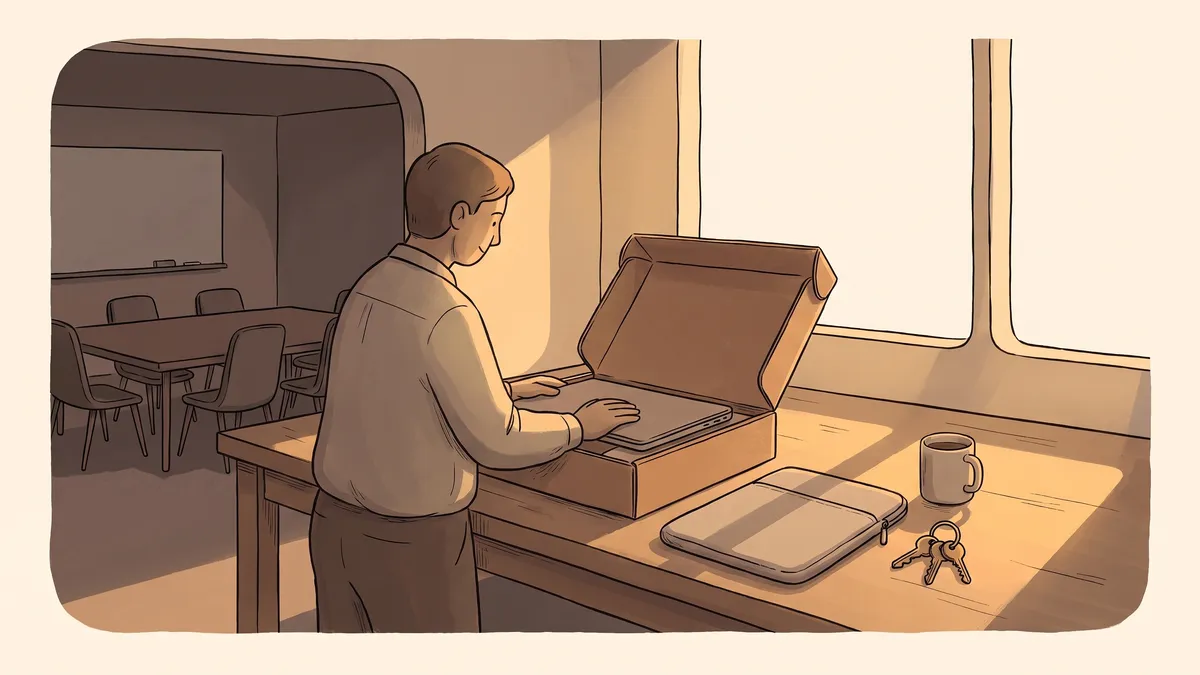
When managed IT is doing its job, you stop noticing your technology, which is exactly how it should be. The internet holds. The email arrives. The card reader does not freeze at the worst moment. The backup is there the day you finally need it.
That is what we do for the businesses and towns we look after. We take on the quiet, ongoing parts so they stay handled, and we are the ones keeping an eye on it, so you get to spend your attention on your actual work instead of the machinery behind it.
Tired of only hearing from your technology when something is wrong? Get in touch and we’ll look at how your business runs today, and what it would take to make it boringly reliable.