The council meeting runs an hour past when it should have. Motions get made, a couple pass, one gets tabled, and a resident brings up something nobody had on the agenda. By the time the room empties, every decision is settled. Then the real chore starts: someone has to turn all of that into a clean, accurate written record.
For a town, that record is the minutes, and they are not optional. They are the official account of what the council decided, and they have to be right. For a small business, it is the notes from the planning meeting or the client call: who agreed to what, what happens next, and who owns each piece.
Either way the shape is the same. The conversation is over. Writing it down is a separate job, done later from memory and half-legible notes, usually by the one person who could least spare the hour.
There is a better way to handle this now, and the good part is that it does not hand your judgment over to a machine.
Why writing it up is worse than it sounds
The cost of minutes and notes is not just the time. It is when the time lands, and how easy it is to get wrong.
You are reconstructing an hour of back-and-forth after the fact. Names get missed. A number gets remembered wrong. The exact wording of a motion, which for a town can matter later, gets smoothed into something close but not quite. And because it is tedious, it slides down the list, so the write-up that should take twenty minutes the same afternoon turns into a nagging task three days later, when the details have already gone fuzzy.
For a small business, the failure is quieter but just as real. The action items never make it out of someone’s notebook, so the thing everyone agreed to in the room simply does not happen, and nobody remembers whose job it was.
What actually happens
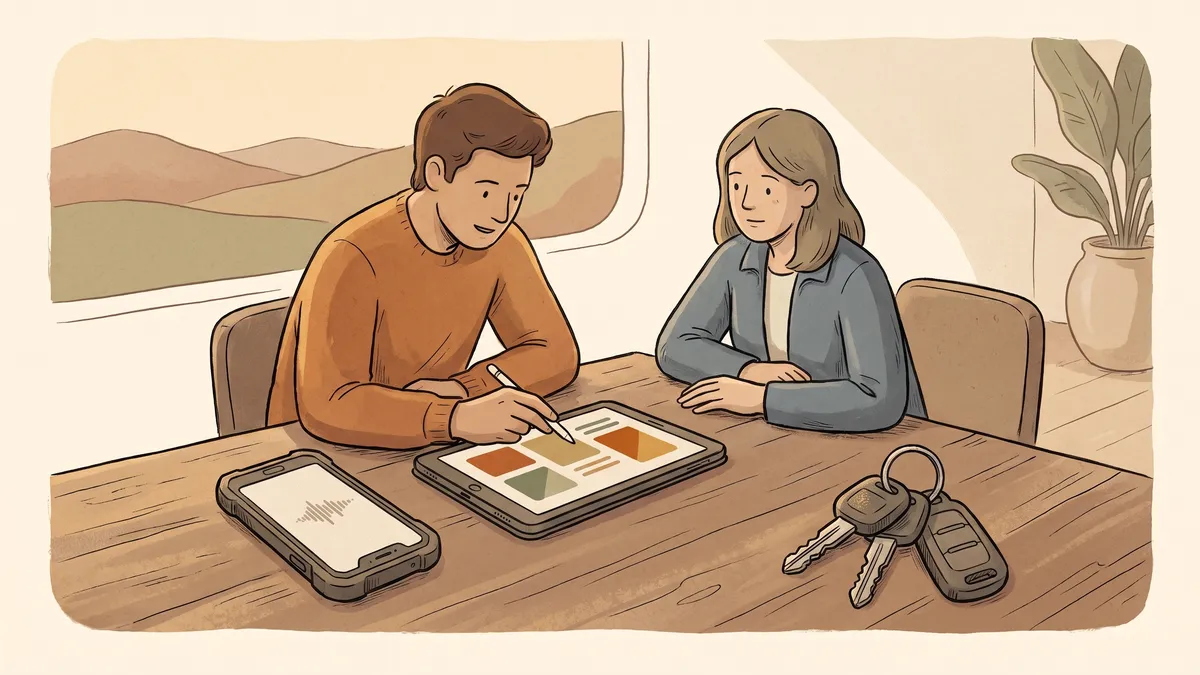
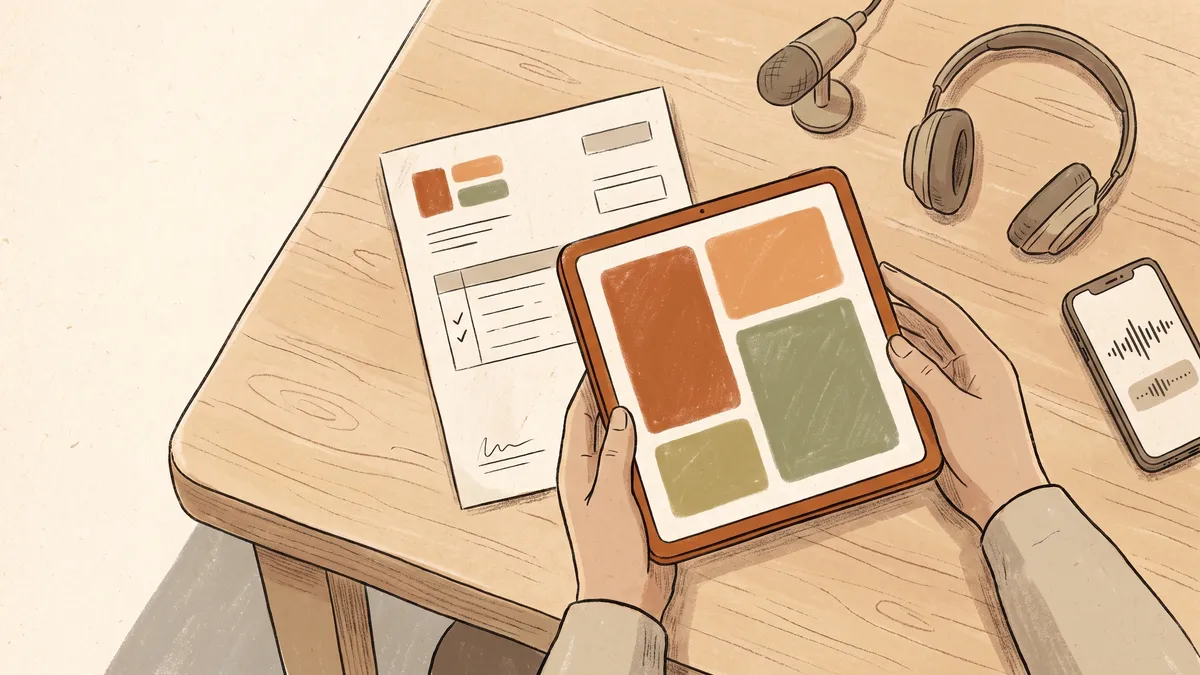
You record the meeting, with everyone in the room aware of it. Afterward, software produces a written transcript of what was said, and then a short draft built from it: the decisions that were made, the action items and who they fell to, and the open points that still need following up.
A person reads that draft against what actually happened, fixes anything that is off, and approves it. What gets filed is the approved version, never the raw output. The tedious part, turning an hour of talking into a first draft on the page, is done for you. The part that needs a human, making sure it is accurate and true to the room, stays with a human.
This is the same idea we keep coming back to in practical automation for a small business: software does the legwork, and a person holds the pen at the moment that matters.
Why a person has to stay on the pen
For a town, minutes are a legal record, so the reviewer is not a formality. The draft can mishear a name, miss a nuance in a motion, or get a vote count wrong, and any of those need catching before the record is approved. A person reads it, corrects it, and signs off. That is not the automation failing; that is the automation doing the heavy part and leaving the judgment where it belongs.
Writing it up from scratch
- An hour of talking reconstructed later from memory and notes
- Names, numbers, and exact wording easy to get wrong
- The tedious task slides for days while details fade
- Action items stranded in one person's notebook
Draft first, then review
- A first draft ready right after the meeting ends
- The transcript there to check any word against
- A person reviews, corrects, and approves before it is filed
- Decisions and owners captured in one clear place
The record becomes something you can use
Once a meeting is written up, it does not have to disappear into a folder. The approved minutes and notes become part of the pile you can ask a plain question and get an answer from: what did the council decide about that road last spring, or what did we tell this client we would deliver. Instead of digging through a year of documents, whoever is at the desk can find it.
For towns, there is a second payoff. Minutes usually get posted for residents to read, and a clean, consistent write-up is far easier to publish in a form everyone can actually open and read on the town website.
- The conversation already happened. Writing it up is a second job, and it is the part worth handing off.
- Software turns the recording into a transcript and a first draft: decisions, action items, and open points.
- A person reviews and approves every time. For a town, the minutes are a legal record, so accuracy is the whole point.
- The finished notes become searchable, so past decisions are easy to find later.
- Start with the one meeting you dread writing up most, and grow from there.
Be open about it. Tell the room the meeting is being recorded, and for a public meeting that is usually expected anyway. The recording is a working tool to get the write-up right; once the minutes or notes are approved, you decide how long to keep it, the same as any other record.
Where to start
You do not wire this up for every meeting at once. Begin with the one that is the biggest chore to write up, the regular meeting whose minutes or notes always land late and always fall to the same person. Get that one working, see the hours it gives back, and add the next.
Tired of losing an afternoon to writing up a meeting that already happened? Get in touch and we will look at where turning recordings into clean, reviewed notes would save your team the most time, with a person still approving every word.